
Coyote Behavior
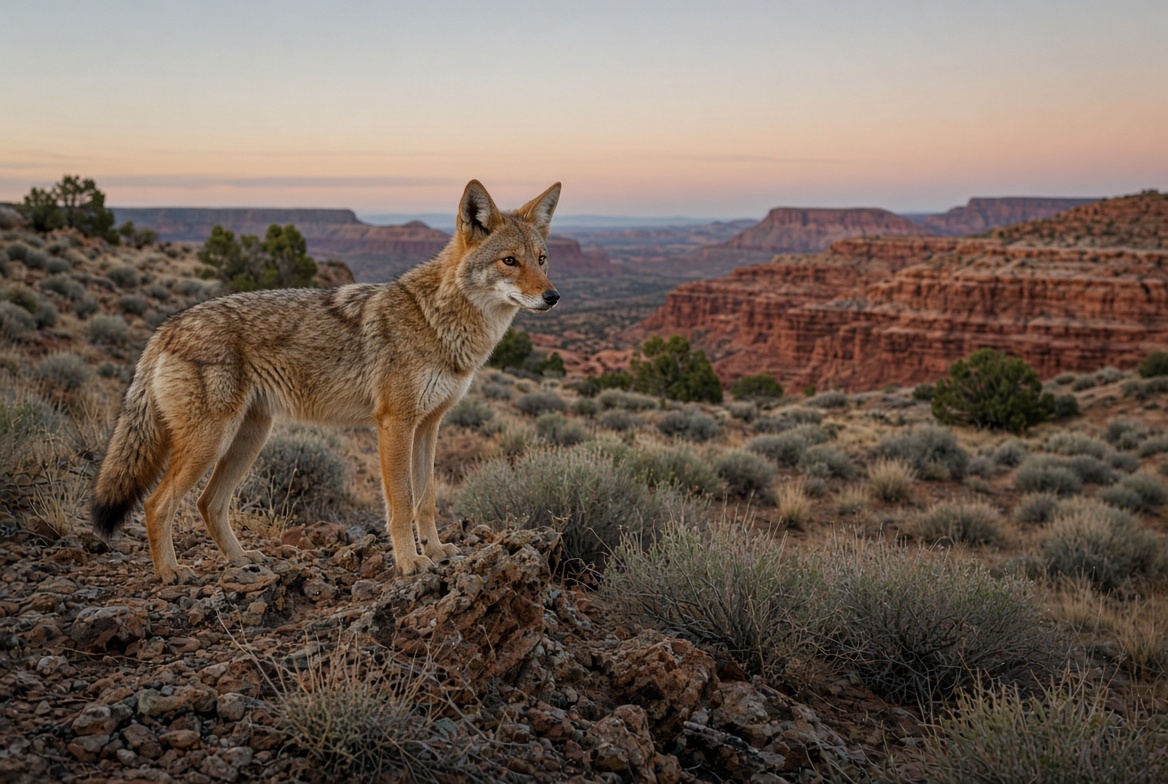
Understanding how coyotes live, move, and communicate makes you a better hunter and a safer one. This is a field-oriented overview of coyote biology in the Intermountain West, including Utah.
Lifecycle
Coyotes typically live 3–5 years in the wild; some reach 10 or more. They pair up as adults and often hold a territory year-round. A family group is usually a breeding pair plus the year’s pups, and sometimes one or more older offspring that stay to help.
Breeding: Most pairing and breeding happens in late winter (roughly January–March in Utah). Pairs are often monogamous for a season and sometimes for years.
Denning and pups: Gestation is about 60–63 days. Pups are usually born from April through May. Litter size is commonly 4–7. Dens may be in washes, rock piles, thickets, old badger holes, or under structures. Pups stay near the den for several weeks while adults bring food.
Rearing: By early to mid-summer pups are moving more, practicing hunting, and traveling with adults. By fall they look like smaller adults. Dispersal often peaks in fall and winter as young animals leave to find their own range. That is when you may see lone coyotes covering a lot of ground.
Seasonal Changes
Winter: Coyotes focus on food and pairing. They may travel farther, use drainages and travel corridors, and respond more to howls as they advertise territory and locate mates. Snow can concentrate them on easier travel routes and around livestock, wintering deer, and towns.
Spring: Adults become more tied to a den. Movement can look smaller on the map, but they still hunt out from the den. They can be extra cautious near pups. Howling may drop while they avoid drawing attention to the den.
Summer: Family groups are active at dawn, dusk, and night to beat heat. Pups start showing themselves more. Adults hunt rodents, rabbits, insects, fruit, and whatever is easy. Water sources, irrigated fields, and edges become important in dry country.
Fall: Pups are nearly full-grown and groups may travel together more. Feeding ramps up before winter. Dispersing young can appear in new country, including closer to towns and roads.
Territory and Movement
A pair or family typically defends a home range rather than wandering at random. Size varies with food: smaller in rich agricultural or suburban edges, larger in open desert and mountain country. They use ridges, washes, two-tracks, fence lines, and canyon bottoms as travel routes.
Coyotes are mostly crepuscular and nocturnal—most active at dawn, dusk, and night—especially near people. In remote country they will move in daylight. After a disturbance they often circle downwind, pause on high ground, and study the area before committing.
Vocalizations
Coyotes use sound to keep contact, warn, and mark territory. Common sounds hunters hear:
- Howls — long, rising calls used to advertise location and territory, especially at dawn, dusk, and night. Group howls can sound like more animals than are actually there.
- Yips and yip-howls — shorter, higher notes, often from family groups assembling or greeting.
- Barks — sharper, often an alarm or challenge when something is too close.
- Whines and squeals — close-range contact, pups, or submission.
A lone howl may be a single animal locating others. A chaotic chorus after a howl is often a family answering from a ridge or wash. Sudden silence after calling can mean they are closing in quietly or have winded something they don’t like.
Foraging and Hunting Behavior
Coyotes are opportunistic. Diet shifts with season and habitat: rabbits, rodents, insects, fruit, carrion, fawns in spring, and sometimes livestock or pets when opportunity and habit line up. They hunt small prey with a characteristic pause-and-pounce. On larger or wounded animals they may work edges, trails, and downwind approaches.
They prefer to work with the wind in their face. If they circle, they are often trying to get downwind of a sound or a decoy. They will use cover, ditch lines, and dead ground to close distance, then stop in the open just long enough to look. Pairs sometimes split: one animal shows while the other swings wide.
Near towns they become more nocturnal and use greenbelts, canals, golf courses, and vacant lots. In mule deer country they key on winter range, fawning areas, and carcasses. After storms they often hunt breaks, south slopes, and places where prey is concentrated.
Senses and Wariness
Smell and hearing are their strongest tools. Eyesight is good at detecting movement. They learn fast. Pressure from people, dogs, or repeated calling in the same spot will push them to hang back, approach from downwind, or stop answering. Mature coyotes are especially good at hanging up just out of easy range and watching.
That wariness is why identification matters at night. At longer range, especially through thermal, shape and gait can fool you. Take time to confirm the animal and what is behind it before you shoot.
What This Means in the Field
- Winter and early pairing season: more travel, more howling, more response to locating howls.
- Denning season: adults may stay closer to cover and be quieter; don’t assume empty country.
- Summer: expect heat-driven night activity and family groups near water and edges.
- Fall: mixed family groups and dispersing young showing up in new places.
- If they circle downwind, they are doing what coyotes do—plan for that approach.
Behavior is local. Desert, mountain, farm, and suburban coyotes all follow the same biology, but they use different cover, schedules, and food. Watch sign, listen, and let the animals tell you how they are using the ground that day.